
At Five Seasons Healing, breast health is an area we are deeply passionate about. We believe integrating Traditional Chinese Medicine (TCM) with Western diagnostic tools help us give women the best care possible. When we support circulation, lymphatic flow and hormonal imbalance, the body has a greater capacity to maintain balance and long-term wellness. Our approach to breast health emphasizes prevention, early awareness, and empowering women with thoughtful, integrative care.
Thermography has become an important part of the conversation for women seeking gentler, non-invasive options for breast screening. To help our community better understand what thermography is, how it works, and who it may be right for, we sat down with Certified Thermography Technician, Patricia Bowden-Luccardi, CTT, CNMT. In the interview below, Patricia shares her expertise and insights into how thermography can support a proactive, preventive approach to breast health.
Breast Thermography 101
Five Seasons: What exactly is thermography, and how does it differ from a mammogram?
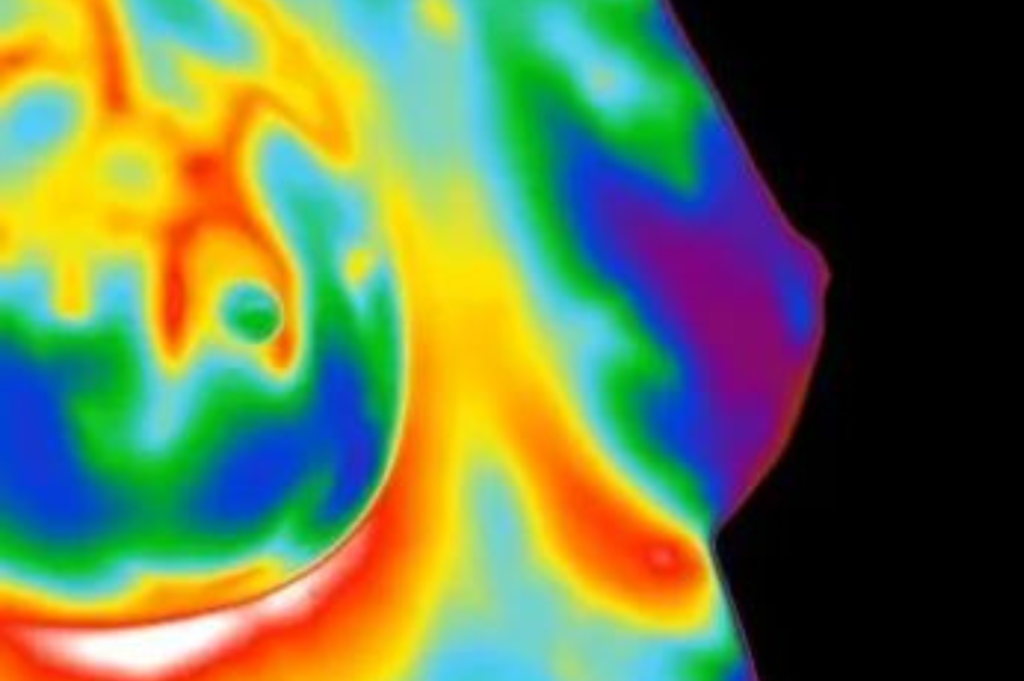
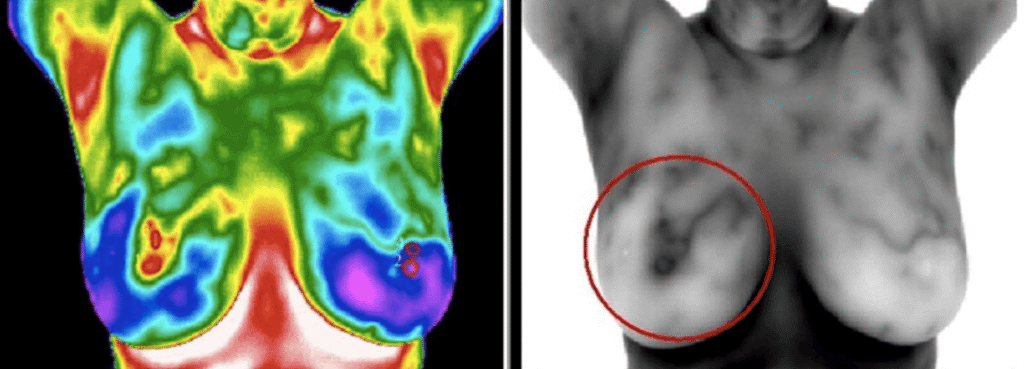
Patricia Bowden-Luccardi: Thermography looks at heat, not organ systems. It looks at the surface heat on the skin for markers of inflammation. So, for example, thermography can see the inflammation from a tumor sometimes as early as 7-10 years before it can be seen on a mammogram, an MRI or an ultrasound. Thermography can also detect lack of heat as well as lymphatic patterns that can indicate things like blockages or lymphatic backup which are important to notice.
A mammogram is looking at anatomical structure. Anatomical studies cannot see heat. Also, thermography is radiation-free with no compression on the breasts, so it’s much less invasive than mammography. And, it’s extremely safe for a woman to do. A child can do it. Even a baby can do it.
Five Seasons: What should someone expect during a thermography appointment, especially if it’s their first time?
Patricia Bowden-Luccardi: First, we sit down and I ask a series of questions about their health and concerns. Then, they would disrobe and acclimate to the room temperature. The reason we do this is to ensure they are giving off the best information and infrared. Then, I start screening the body using a camera which acts like a thermometer. No part of the body is touched throughout the whole procedure. The process takes about 30 or 45 minutes between the acclimation and the imaging time. Once we’re finished, I will educate the patient about estrogen dominance and the benefits of iodine. A few days later, the patient will receive a digital copy of their thermography results and be able to schedule an appointment with a doctor to review their results and give customized recommendations and next steps.
Breast Thermography for Dense Breasts
Five Seasons: How is thermography especially helpful for women with dense breasts?
Patricia Bowden-Luccardi: Thermography is wonderful for women with dense breasts because thermography has no issues with the density of breasts. Whereas in a mammogram, the sensitivity can be as low as 72% which means that they can’t see through it.
Five Seasons: In case there are people that don’t know, what are dense breasts and what causes dense breasts? How would someone know if they had dense breasts?
Patricia Bowden-Luccardi: Forty-nine percent of women have dense breasts. There is nothing wrong with dense breasts, but it’s just that they cannot be screened on mammograms. Dense breasts are more glandular and show up white on a mammogram. Because cancer shows up white on a mammogram as well, it’s much harder to detect with dense breasts. Usually you’ll know if you have dense breasts if you’ve already had a mammogram or through a breast exam. Breasts can become less dense as we get older and can become denser from eating dairy products.
Five Seasons: What would you say to women who are curious but unsure about replacing or supplementing mammograms with thermography?
Patricia Bowden-Luccardi: Well, to me, it is a no brainer. I just recently wrote an article on The Suppressed Dangers of Mammograms. There have been 25 and 30 year studies on mammograms through the Journal of American Medicine and the British Medical Journal that show that the harm of mammograms outweigh the benefits. These studies show that radiation can actually start to change cellular tissue that can become cancerous. Another thing to note is that radiation is cumulative and it’s very difficult to detox it out of the body. Several countries like Switzerland have abolished mammograms and it looks many more are going to be doing the same for good reason.
Thermography was covered by insurance until 1987 but with the pressure of the mammography industry, the AMA no longer covers it with insurance. That’s unfortunate but it says something. I would wholeheartedly encourage women to do their research and strongly consider thermography over mammography for all the reasons I shared.
Ultrasounds for Breast Health
Five Seasons: We are seeing an increased value in the use of ultrasounds for breast health. What are they detecting, and how can it be used along with thermography?
Patricia Bowden-Luccardi: An ultrasound is looking for a mass or something that they can see visually. Remember, thermography is just heat–it doesn’t show masses. So, an ultrasound works very well with thermography as a comprehensive approach. There is no radiation involved so it is very safe.
Now, here’s something interesting. I send a lot of my NYC patients to Dr Robert Bard who does advanced 3 and 4D Doppler ultrasound. It’s very precise and he has saved so many of my patients from getting biopsies. Unfortunately, there’s not that many around the country, but there is something new out there called The QT scan. QT scans can see through density, calcifications, and it can see through a cyst. It’s a very advanced ultrasound and some say that this will take the place of a mammogram and an MRI. Unfortunately, there’s only about five systems out in the country right now and the closest to us would be in Lancaster, Pennsylvania with Dr Jen Simmons.
Sulforaphane for Breast Health
Five Seasons: You’re a big supporter of sulforaphane, the compound found in cruciferous vegetables. Can you explain its role in breast health, and what results you’ve seen when women use it consistently?
Patricia Bowden-Luccardi: Absolutely. First of all, I always educate people about hormonal imbalance, especially estrogen dominance because we live in an estrogen-dominant world with all the petrochemicals and environmental estrogens. It’s very well known that estrogen dominance is one of the leading causes of breast cancer. Sulforaphane, which is found in cruciferous vegetables, has the ability to go to the estrogen receptor sites and flush off debris and pre-cancerous toxins.
Research has shown that broccoli seeds may be more potent in sulforaphane than broccoli sprouts. Studies at John Hopkins have looked at the efficacy of these (broccoli) sprouts and seeds and how they inhibit breast cancer stem cells. So this is very important for women’s breast health because sulforaphane flushes those receptor sites, allowing our own hormones to signal.
The biggest thing in my practice that I’ve been doing for 13 years is working with estrogen dominance. My patients go on sulforaphane and take it every day for six months. We see huge results in the elimination of estrogen dominance. And, what’s cool is that you can actually see this visually on the thermography scan–it commonly looks like leopard spots or pockets of inflammation.
Sulforaphane is my favorite nutraceutical that I work with in my practice, and this is where I’m getting the most results with estrogen dominance. And, because we can see the results visually on the scan, it’s very satisfying that we know we’re moving in the right direction and essentially reversing the potential onset of breast cancer.
Lifestyle Habits for Breast Health
Five Seasons: Beyond screening, what are some of the most impactful lifestyle habits women can adopt to support breast and lymphatic health, particularly when it comes to reducing estrogen disruptors and environmental toxins?
Patricia Bowden-Luccardi: I would say that lymphatic drainage and working with breast health in relation to the lymphatic system is so important. In the book, Dressed To Kill by Sydney Ross Singer (who’s a medical anthropologist), [Singer] went around the world looking at women’s breasts, their breast health, their lymph health and discovered that there is a direct link to bras and breast cancer. He and John Mayo of the Mayo Clinic said that bras create stagnant lymph with a potential for breast cancer. So, if a woman is not wearing something looser, that’s non-constrictive, she is putting her breasts at risk because lymph needs to be able to move. I had three women who slept in their bras. They all had breast cancer. That is the most dangerous thing a woman can do. So, I definitely encourage women to avoid sleeping in bras and to not wear constrictive bras, especially with underwire because they restrict lymph flow.
Also, I want to share about iodine. I know in Chinese medicine, they work with kelp and seaweed. Iodine regulates estrogen. Without enough iodine, estrogen becomes dysregulated and dysfunctional. That’s why we’re seeing so much estrogen dominance. The reason that we don’t hear anything about this is because you cannot patent the element. There is no money to be made. So in the 70s, they shelved it and created fear around iodine. So, with women who have lumps in their breasts, I recommend iodine. Iodine is crucial for breast health and thyroid health and it’s mostly stored in the thyroid and in the ovaries. You want to take it with selenium. In Japan they have a very low breast cancer rate because they have good selenium in their soil and they eat a lot of seaweed, which is high in iodine.
If a woman has lumps in her breast, you can use the Lugal solution, which is a 2% iodine. You do about two droppers full with castor oil, put a pact on the breast with a little heat, and the lumps go away. I also work with women with PCOS. If the cysts are small, I can work with an iodine douche, and within weeks, they’re already shrinking. Iodine is amazing. We all need it, and most of us aren’t getting enough.
We hope you enjoyed this interview as much as we enjoyed connecting with Patricia and learning from her. If you’re curious about thermography or wondering whether it may be a supportive addition to your breast health plan, we encourage you to connect with Patricia directly. She offers thermography services in Albany, Chatham, Manhattan, Long Island, and Connecticut, making this screening option accessible to women throughout the region. Patricia also provides education and resources to help women make informed, empowered decisions about their breast health.
Learn more about Patricia’s work and how to schedule an appointment here:
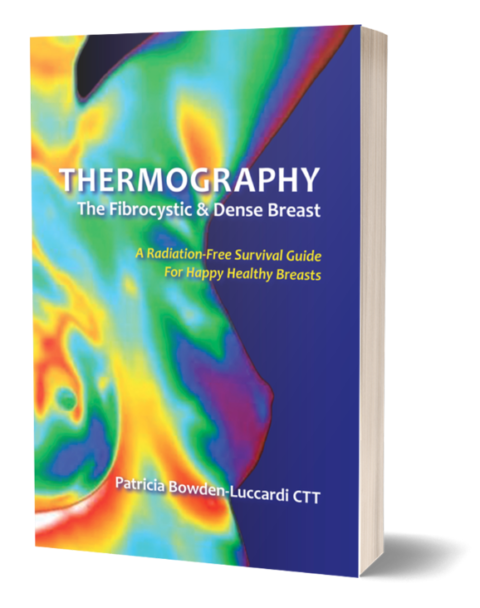
Patricia is also the author of Take Responsibility for Your Breast Health, where she shares practical guidance on breast health, screening options, and self-advocacy.
At Five Seasons Healing, we believe breast health is best supported through an integrative, whole-body approach. If you’d like to complement screening tools like thermography with acupuncture, herbal medicine, and lifestyle support rooted in TCM, we’re here to support you.
👉 You can schedule an appointment with our team here.
👉 Experiencing hormonal symptoms and want deeper insight and next steps to support your fertility and overall well-being? We invite you to take our free assessment:
Decode Your Hormone Imbalance Through the Lens of Traditional Chinese Medicine.
Article References:
- Nick Mulcahy. (April 17, 2014) Swiss Medical Board: Stop Widespread Mammography Screening. Medscape Medical News
- Yanyan Li, Tao Zhang, Hasan Korkaya, et al. Sulforaphane, a Dietary Component of Broccoli/Broccoli Sprouts, Inhibits Breast Cancer Stem Cells. National Library of Medicine. 2010 April 13. Available from: https://pmc.ncbi.nlm.nih.gov/articles/PMC2862133/